

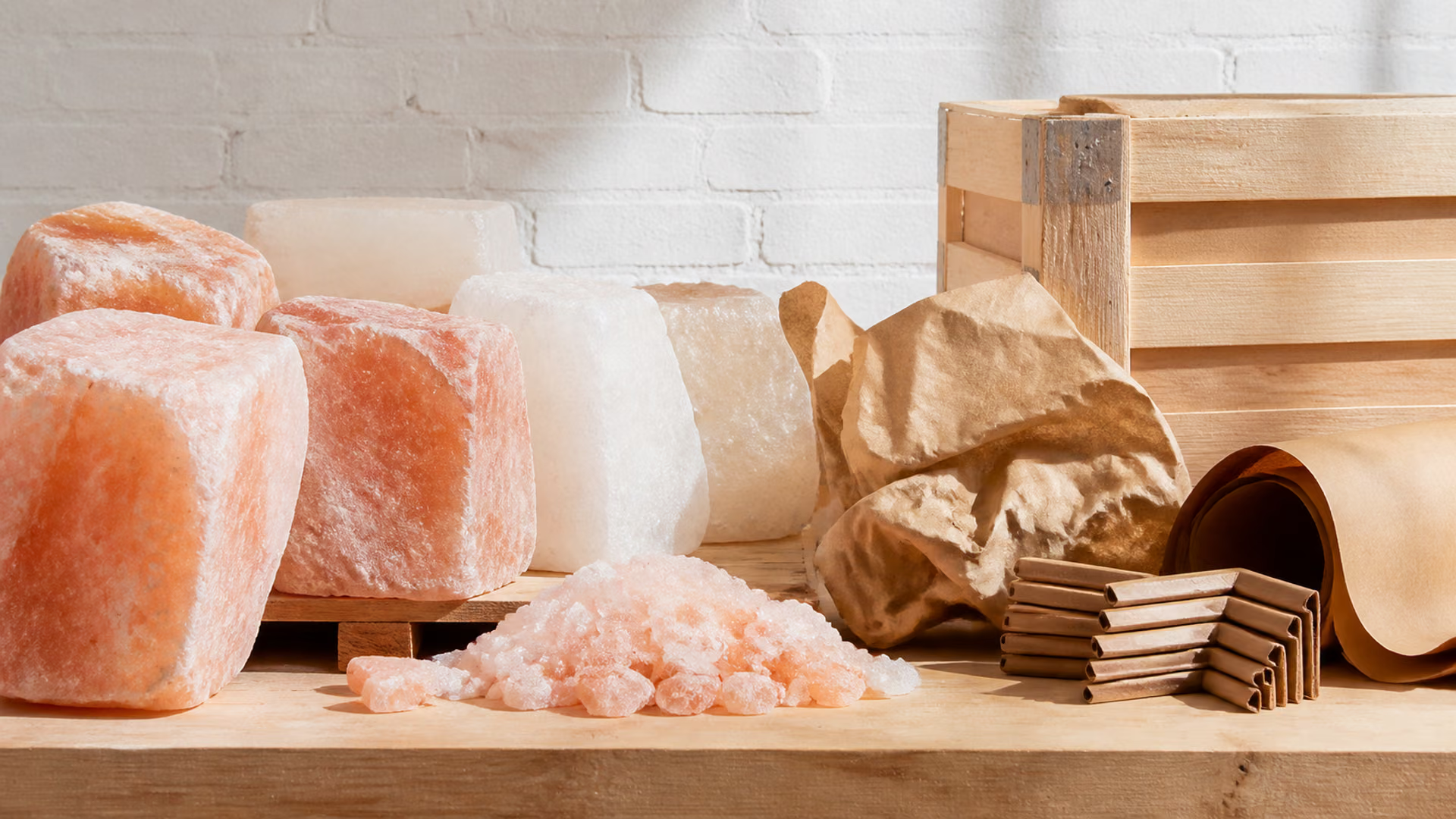
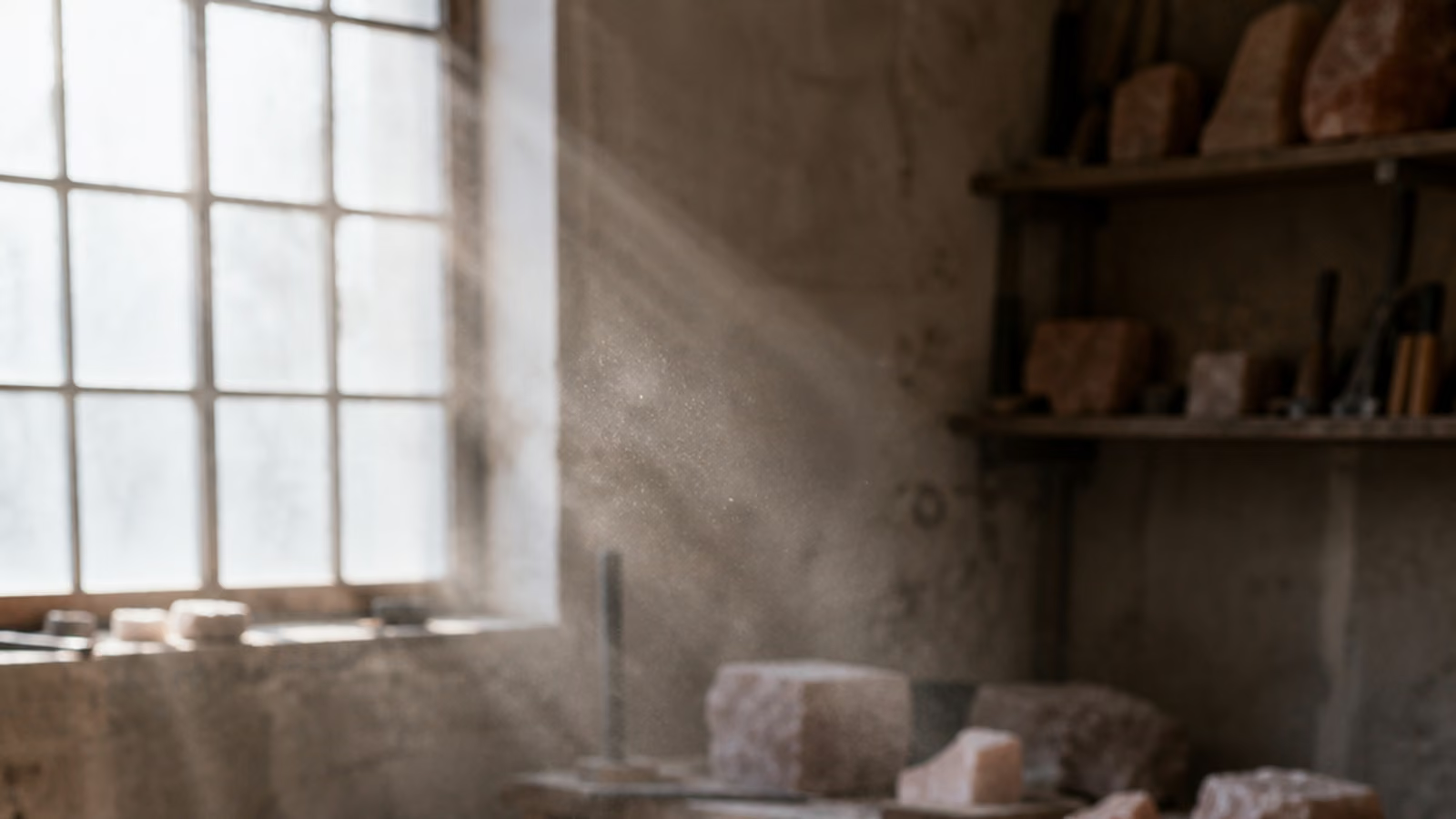
Himalayan pink salt comes from the Khewra Salt Mine in the Salt Range of Punjab, Pakistan, a line of hills south of the Himalayas. The rock is halite, a mineral form of sodium chloride, laid down roughly 250 million years ago. Every Salt Slab Co plate is cut from a single block there, then checked and packed in Cockeysville, Maryland.
Key facts
- Mine: Khewra Salt Mine, Jhelum District, Punjab, Pakistan
- Region: the Salt Range, between the Indus River and the Punjab Plain
- Mineral: halite (rock salt), 98%+ sodium chloride in our plates
- Deposit age: about 250 million years
- Color: pale rose to deep amber, from traces of iron oxide
- Packed and shipped from: 1 Beaver Ct, Cockeysville, MD 21030
Where does Himalayan salt come from?
Khewra is the oldest and largest working salt mine in Pakistan. It works a deep seam of halite that formed when an ancient shallow sea evaporated. The salt left behind was buried under later rock and pressed over geological time into dense, banded stone. That density is why a salt plate holds heat so well: there is a lot of mass in a small footprint.
The name "Himalayan" is a trade name. The mine sits in the Salt Range, south of the main Himalayan range.
Why is Himalayan salt pink?
Small amounts of iron oxide and other minerals in the halite give it color. Color and banding change across the seam, so plates run from pale rose to deep amber, with faint or strong diagonal bands depending on where the block was cut. That is why your plate will not match the photo exactly. It is cut stone, not a manufactured item.
Is Himalayan salt food grade?
Yes, when it is cut for food use. Our plates are cut to food grade tolerance and are 98%+ sodium chloride with 84+ trace minerals. Nothing is applied to the surface: no dyes, no coatings, no sealants. The face that touches food is the mineral itself, which is also why cleaning uses a barely damp cloth rather than running water.
How is a salt plate cut and graded?
Blocks chosen for cooking plates are cut to a stable thickness and checked for open fractures. A visible fracture line is a plate that will split under heat, so those blocks do not become cooking plates. Cutting runs to a tolerance of plus or minus 0.125 inch, so a plate's size is close but not exact, and its weight varies a little within the same size.
Packed in Maryland
Salt Slab Co orders ship from 1 Beaver Ct in Cockeysville, Maryland. Plates are received, checked, and packed there rather than shipped straight from the mine. Every plate goes out in a double walled box with corner protection and foam. If one arrives damaged, photograph the box and the plate before unpacking further and contact us within 15 days. We ship across the United States and Canada.
What happens to the plate next?
A new plate is not ready for high heat on arrival. Salt holds a little moisture in its crystal grain, and heating it fast turns that moisture to steam inside the stone. The five stage tempering schedule drives it out slowly.
After that, a plate is a consumable, not a permanent pan. The surface wears slowly with use and cleaning, and most plates give 20 to 100 hot cooks. Plates kept for chilled serving often last several years. Read the lifespan guide, or start with the 12 x 8 searing plate.