


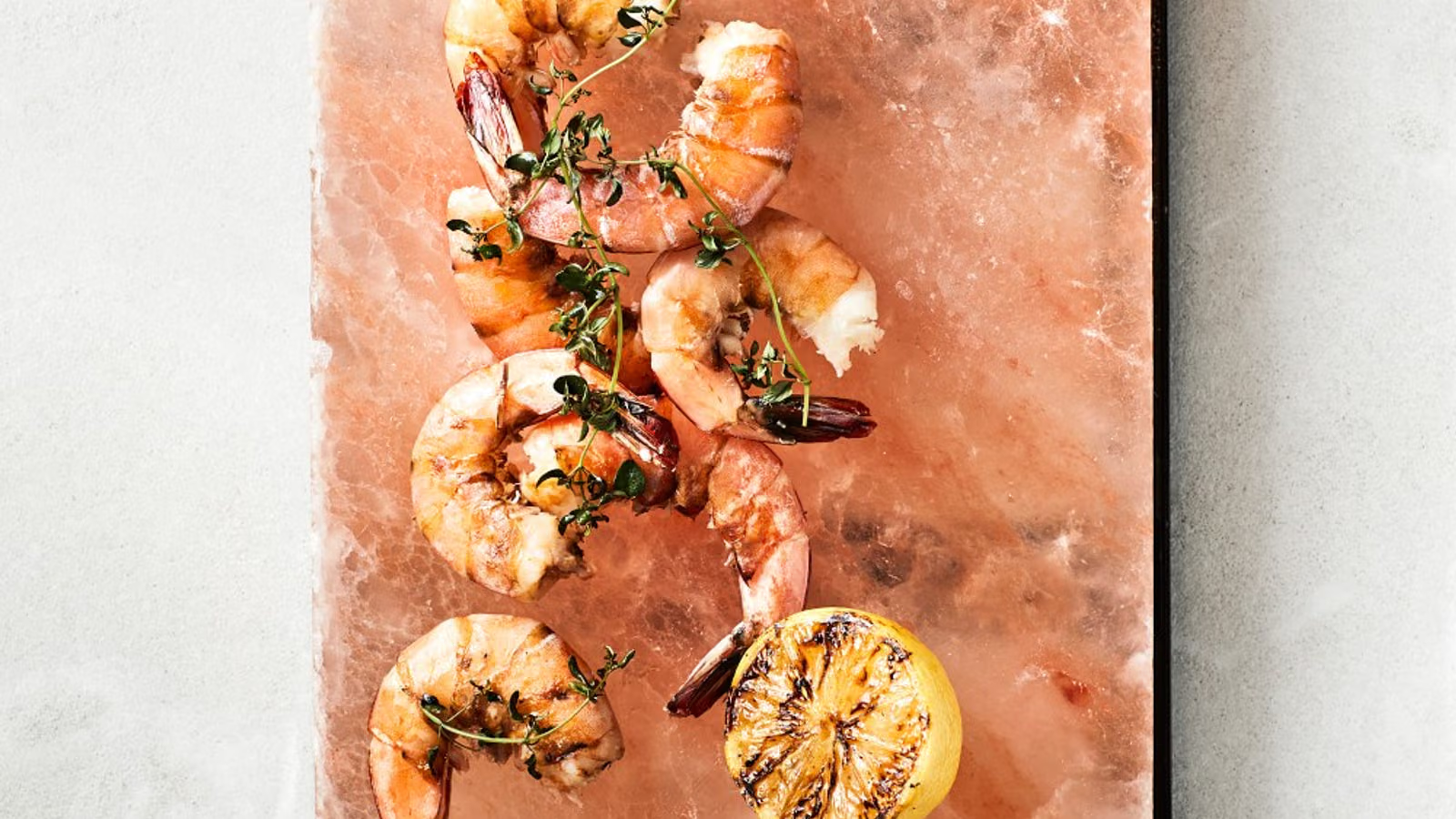
You can heat a Himalayan salt block on a gas burner, an electric coil with a diffuser or holder, in an oven, or on a charcoal, gas, pellet, or kamado grill. It will not heat on induction, because salt is not magnetic, and it can damage a glass top stove. On every heat source, start cold and raise the heat in stages to about 500 F.
Key takeaways
- Gas, electric coil, oven, and grill can all heat a salt block. Always start cold and raise the heat in stages.
- Induction cannot heat a salt block because salt is not magnetic.
- We do not recommend glass top stoves. The risk is to the cooktop, not the plate.
- On an electric coil, always use a metal diffuser or cast iron holder between coil and plate.
- On a grill, start on indirect heat and move to direct heat only in the final stage.
- On a pellet grill or kamado, put the plate on before lighting and raise the set point in steps.
- Chilled serving needs no heat source: 2 hours in the fridge or 1 hour in the freezer is enough.
Heat source compatibility at a glance
| Heat source | Works? | Key rule |
|---|---|---|
| Gas burner | Yes | Start on the lowest flame, center the plate over the burner. |
| Electric coil | Yes | Always use a metal diffuser or cast iron holder between coil and plate. |
| Oven | Yes | Cold oven start, center rack, no broil. |
| Charcoal grill | Yes | Indirect side first, over the coals only for the last stage. |
| Gas grill | Yes | Burners on low, raise in stages with the lid closed. |
| Pellet grill or kamado | Yes, with care | Put the plate on while the grill is cold, then raise the set point in steps. |
| Induction | No | Salt is not magnetic, so the cooktop cannot detect it. |
| Glass ceramic | Not recommended | The weight and heat can crack the glass. |
Whatever the source, follow the five stage schedule: 200 F, 250 F, 300 F, 400 F, then 500 F, 15 minutes each on a first use.
Can you use a salt block on a gas stove?
Yes. A gas burner is the simplest heat source. Center the dry plate over the burner, start on the lowest flame, and raise it through each stage. A full gas heat-up takes about 45 minutes after the first temper. Never put a cold plate on a burner that is already on high.
Can you use a salt block on an electric stove?
Yes, on an electric coil, but never directly on the coil. A coil is a narrow ring, and direct contact burns a hot line into the stone while the edges stay cool. That uneven heat is a common cause of cracks. Place a flat metal heat diffuser or a cast iron holder between coil and plate, then follow the same stages. Smooth glass electric tops are a different case, covered below.
Can you put a salt block in the oven?
Yes, if it goes into a cold oven. Place the plate on the center rack, set the oven to 200 F, and raise the dial through the five stages as the oven warms. The oven surrounds the plate with heat, which makes it the most even method and the best choice for a first temper. Skip the broil setting, which heats only one face. Once hot, the plate starts cooling as soon as it leaves the oven, so move it only when you are ready to cook, using heat resistant gloves.
Can you use a salt block on a grill?
Yes. On a charcoal grill, bank the coals to one side and start the plate on the indirect side. Move it over the coals only for the final stage, once it carries heat through its full thickness. On a gas grill, light the burners on low, close the lid, and raise them in steps. Charcoal takes longer to settle than gas, so allow extra time for the first two stages.
On a pellet grill or kamado such as a Big Green Egg, put the plate on the grate before you light it, then raise the set point in steps of about 100 F every 15 minutes. These grills can climb fast once lit, so watch the dome thermometer. Our plates are rated to 500 F, so there is no need to run the grill hotter than that.
Why doesn't a salt block work on induction?
Induction heats cookware through a magnetic field, so the pan must contain iron. Halite is not magnetic, so the cooktop does not detect the plate and produces no heat. A cast iron holder on induction would heat, but it heats much faster than the salt above it, and that uneven heat risks cracking the plate. We do not recommend it. Use the oven or a grill instead. Our stovetop compatibility guide has the full detail.
Can you use a salt block on a glass top stove?
We do not recommend it. The risk is to the cooktop, not the plate. An 11 pound stone at 500 F puts both weight and concentrated heat on the glass, which most manufacturers do not rate for. If glass is your only stovetop, temper and cook in the oven or on a grill.
Chilled serving needs no heat source
For cold food, skip heat entirely. Chill a dry plate for 2 hours in the refrigerator or 1 hour in the freezer and it holds serving temperature for about an hour. Let it return to room temperature before you ever heat it. See the chilled serving guide.
Reading temperature on any heat source
An infrared thermometer aimed at the center gives the clearest reading. Without one, flick water on the surface: at about 500 F the drops skate and vanish in a second. Light ticking around 300 F is normal on any source. A single loud crack means the heat climbed too fast, so lower it and hold for 10 minutes.
Can you switch heat sources between uses?
Yes. A plate tempered in the oven last week can go on a gas grill this week. The only rule that carries across every source is to start cold and climb through the stages in order.
FAQ
Questions, answered
No. Induction needs a ferrous base and salt is not magnetic, so the cooktop will not detect the plate. Use gas, an oven, or a grill.
We do not recommend it. The risk is to the cooktop, not the plate. An 11 pound stone at 500 F is more than most glass tops are rated for, and direct contact can crack the glass. Use gas, an oven, or a grill instead.
Up to 500 F for cooking. You can push higher on charcoal, but the plate erodes faster and the return is small.