


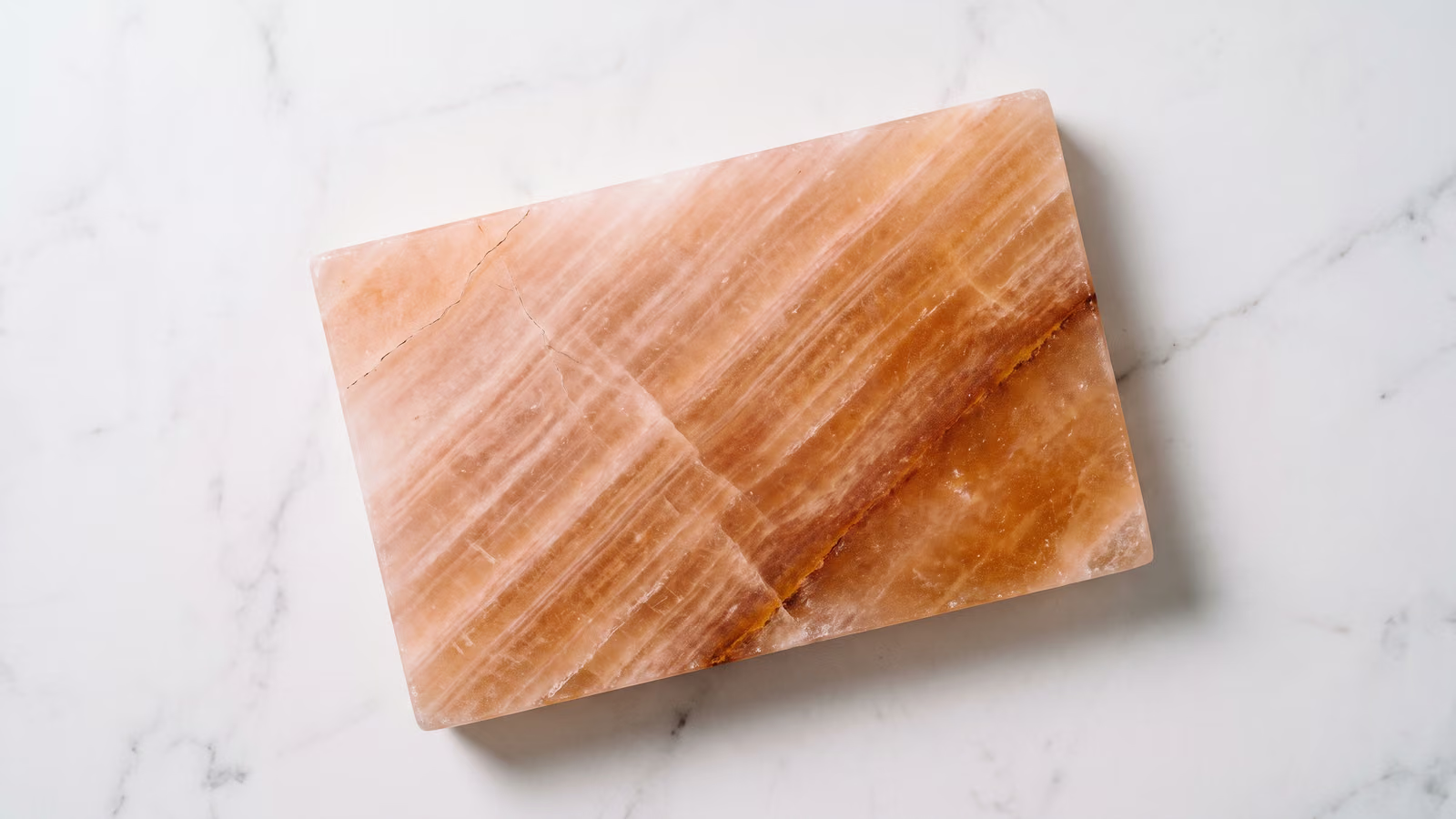
A salt block usually cracks because moisture inside the stone turned to steam too fast. The four causes are heating too quickly, thermal shock from a sudden temperature change, washing with water, and damp storage. Heat slowly from cold, keep water away, and store the plate dry to avoid almost every crack.
Key takeaways
- Most first-use cracks come from heating too fast. Follow the five stage schedule every time.
- Do not move a hot plate onto a cold or wet surface, and do not set a cold plate onto an already hot heat source.
- Keep water to a barely damp cloth. Never soak a salt plate, run it under a tap, or wash it in a dishwasher.
- Store the plate completely dry and away from humid parts of the kitchen, including near a sink or dishwasher.
- A plate slowly getting thinner with use is normal wear, not the same thing as cracking, similar to a cutting board wearing down.
- If a plate cracks on its first heat despite following the schedule, we replace it within 15 days of delivery with a photograph of the plate and the packaging.
The four causes at a glance
| Cause | When it shows up | How to avoid it |
|---|---|---|
| Heating too fast | During the first temper, often in early stages | Five stage schedule, 15 minutes per stage |
| Thermal shock | The moment hot stone meets a cold surface, or cold stone meets a hot one | Heat and cool in place, gradually |
| Water and washing | On the next heat after a rinse or soak | Scrape dry, wipe once with a barely damp cloth |
| Damp storage | On the first heat after weeks in a humid spot | Dry 24 hours, store wrapped on a dry shelf |
Heating too fast
This is the main cause by a wide margin, especially on a first use. Halite holds a little moisture inside its crystal grain. Heat it too quickly and that moisture becomes steam before it can escape. Steam needs far more space than water, and the pressure inside dense stone splits it.
The fix is the five stage tempering schedule: 200 F, 250 F, 300 F, 400 F, then 500 F, 15 minutes each, about 75 minutes the first time. Never raise the heat by more than about 100 F every 15 minutes.
Thermal shock
Thermal shock happens when one face of the plate changes temperature much faster than the rest. A hot plate set on a cold or wet counter cools from the bottom while the top stays hot. A cold plate set on a hot grill grate heats from the bottom before the rest has moved. In both cases, parts of the stone expand or shrink at different rates.
The fix works both ways: start cold on a cold heat source, and let the plate cool exactly where it finished cooking. A chilled plate should also return to room temperature before it is heated.
Water and washing
Salt dissolves in water. Running water and soaking thin the surface and push moisture into the grain, which turns to steam on the next heat. Scrape residue dry, wipe once with a barely damp cloth, and never use a tap, soak, or dishwasher. See the cleaning and storage guide.
Damp storage
A plate kept near a sink, dishwasher, or in a damp basement slowly absorbs moisture from the air. It will not feel wet, but the moisture is there when the plate goes back on the heat. Dry the plate for 24 hours after cleaning, wrap it in a towel, and store it on a dry shelf. If it has sat unused for months, hold each tempering stage a little longer than usual.
Wet or marinated food
A smaller but common cause. Liquid from marinated or brined food soaks into the hot surface and turns to steam. Pat food dry before it touches the plate.
Other factors
Natural fracture lines, invisible to the eye, sometimes run through cut halite. Stress tends to find them first. This cannot be fully removed from natural stone, but correct heating makes it far less likely to matter.
Thicker and heavier plates hold more energy and take longer to even out, so they reward patience at every stage. Keeping the same side up every time also helps, because the cooking face and the base wear differently.
Is a crackling salt block breaking?
Usually not. Light ticking or a faint crackle, like charcoal settling, is normal during heating, most often around 300 F. It is the grain adjusting as the last moisture leaves. A single loud crack is the sound to act on. Lower the heat right away and hold at the current stage for 10 extra minutes. If a line now runs through the plate, stop heating and let it cool in place.
Cracking vs normal wear
A sudden split, often with a sharp sound, is a failure caused by one of the four causes above. Slow thinning, flaking, or small surface lines over many uses are normal wear, the way a cutting board wears down. A white, cloudy surface after heating is dried salt, not damage. Read more in the lifespan and replacement guide.
Can you still use a cracked salt block?
If the plate has split into pieces, do not heat it again. Uneven pieces heat unevenly and can break further. Large, flat pieces can still be used chilled for serving, or grated as finishing salt.
If a plate arrives cracked or splits on the first heat
If a plate arrives cracked, or splits during its first temper while you followed the published schedule, we replace it. Contact us within 15 days with a photo of the plate and the packaging. Cracks after many cooking cycles are normal wear and are not covered, and we will tell you honestly which applies.
FAQ
Questions, answered
Almost always from heating too fast. The other causes are thermal shock, washing with running water, and storing the plate somewhere damp.
Light ticking and popping while heating is normal. If you hear a sharp crack, reduce the heat and hold for ten minutes before going further.